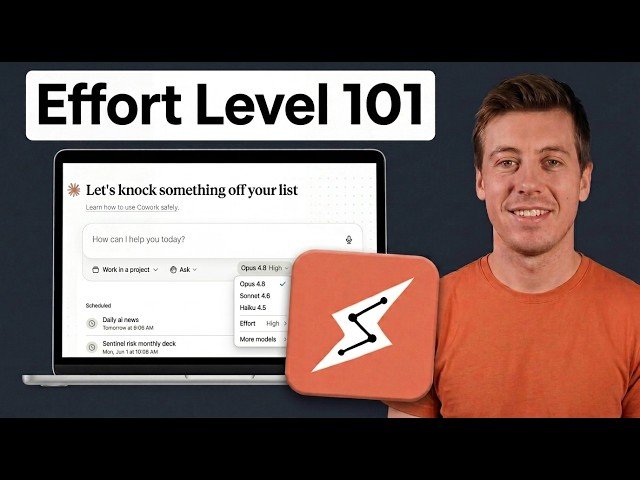
Overview: This video reviews Anthropic’s Opus 4.8 effort-level feature in Claude Co-work, demonstrating five effort settings (low, medium, high, extra, max), how they affect response depth, latency, and token cost, and testing the same prompt across levels. The creator compares outputs, highlights a session-change quirk, and shows real token usage on a $100 plan to recommend practical choices for everyday and heavy-duty tasks.
– Effort levels explained: Breakdown of each setting (low→max), their intended use cases, and Anthropic’s official recommendations for Opus and Sonnet.
– Comparative test: The same CDV (19th-century photographic cards) research prompt is run across all five efforts to show differences in length, detail, and usefulness.
– Token and cost impact: Demonstrates real consumption—five runs consumed ~20% of a $100 plan—and discusses when higher effort is justified versus when to use low/medium.
– Usability quirk: Notes that once a session starts you cannot change the model effort mid-conversation, a limitation likely to affect iterative workflows.
Quotes:
Opus 4.8 runs on high effort by default — you might be burning tokens and time on simple tasks.
Just those five prompt runs used 20% of my $100 plan.
Once a session’s effort is set, you can’t change it mid-conversation.
Statistics
| Upload date: | 2026-05-29 |
|---|---|
| Likes: | 12 |
| Comments: | 7 |
| Statistics updated: | 2026-05-31 |
Specification: How to Use Claude Effort Levels (Full Guide)
|