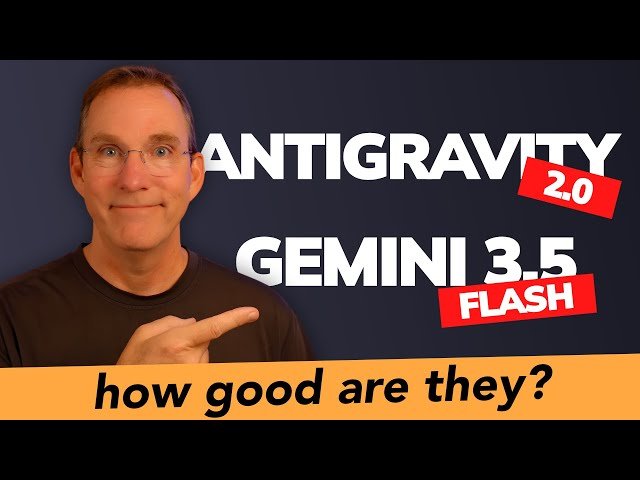
An analysis of Google I/O that focuses on the new Gemini 35 Flash model and the redesign to Anti‑Gravity 2.0. The video compares Flash’s speed and durability using a CARE benchmark (planning quality and intent recovery), explains the move to an agent-centric engine (AGY CLI), and demos agent workflows, browser automation, and practical limitations for longer development tasks.
– Performance and benchmark: The presenter uses the CARE benchmark to evaluate planning quality and intent recovery. Gemini 35 Flash is extremely fast but shows lower intent recovery (~75% medium) than top models (~81%), raising caution for long, complex plans.
– Anti‑Gravity 2.0 redesign: The old multi-panel IDE is replaced by an agent-first interface and the AGY CLI engine. The shift prioritizes cloud-hosted agent orchestration, multi-project threads, and scheduled tasks while removing terminals and many plugin surfaces.
– Developer impact: Strengths include rapid agent tasks, project-level conversation management, and built-in browser skills. Weaknesses include no native terminal/plugins, limited file viewer ergonomics, and potential fragility for lengthy coding efforts.
– Practical demos: Demonstrations include automated video clip extraction, browser-driven image generation, and side-by-side comparisons showing Flash’s speed but also where intent is lost during plan generation.
Quotes:
Anti-gravity is bringing anti-gravity.
The highest intent recovery is 81% — it gets eight out of ten items through.
They went unapologetically agenticentric.
Statistics
| Upload date: | 2026-05-22 |
|---|---|
| Likes: | 29 |
| Comments: | 7 |
| Statistics updated: | 2026-05-22 |
Specification: Gemini 3.5 Flash Is Good. That’s Not the Story
|