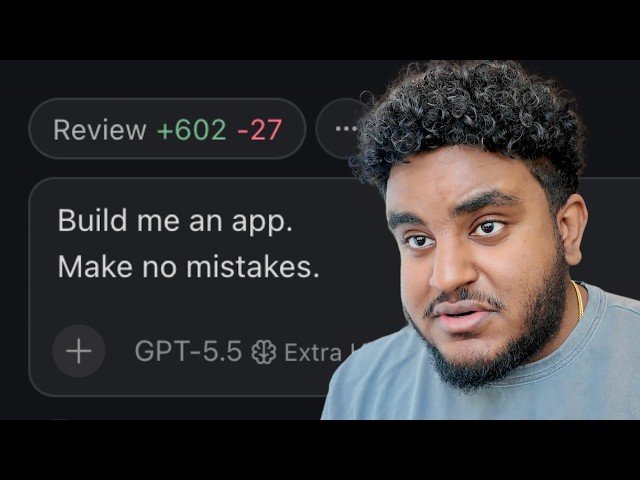
This video shows a developer iterating an agent-driven engineering workflow while building an ‘artifacts’ preview feature for the Pluto app. He demonstrates tools (Cursor, GPT-5.5, Grapile, Whisperflow), explains GP-loop automated code review, and outlines a staged five-PR rollout with CI/CD and sandboxing. The recording includes live planning, code generation, testing strategy, UI tweaks, and practical product decisions during implementation.
– Tooling and input: Walkthrough of the chosen stack — Cursor for development sessions, GPT-5.5 extra high fast for generation, Grapile (GP-loop) for iterative code reviews, and Whisperflow to capture spoken prompts.
– Artifact feature spec: Defines artifacts as first-class, right-side previews for markdown/HTML/SVG/code and React components, with artifact detection, registry, preview runtime, versioning, and error states; recommends sandboxed compilation for executable components.
– Development process: Uses a staging branch, CI/CD, and a conservative five-PR rollout to keep changes small and reviewable. GP-loop automates review-address cycles until high confidence (5/5) is reached.
– Product and UX notes: Describes Pluto capabilities (agent emails, file workbench, virtual card/phone ideas, dedicated compute) and live UI iterations — disabling raw HTML streaming, adding a “crafting artifact” state, resizable preview, and routing/preview bugs to fix.
Quotes:
I’m a yapper. I’m a YouTuber. I yap for a living.
We might be 6 to 12 months away from models doing most — maybe all — of what software engineers do end to end.
I’m actually working on being able to give the agent its own credit card, virtual card, so it can make payments.
Statistics
| Upload date: | 2026-05-22 |
|---|---|
| Likes: | 1301 |
| Comments: | 153 |
| Fan Rate: | 1.39% |
| Statistics updated: | 2026-06-20 |
Specification: My Agentic Engineering Workflow (step by step workflow)
|